The VW Kombi Type 2 is the Volkswagen bus and van family built from 1950 onward — distinct from the Type 1 (the Beetle). Its best-known generations are the Splitscreen “T1” (1950–1967) and the Baywindow “T2” (1968–1979), with variants including the Kombi, Microbus, Deluxe “Samba”, Panel Van and Pickup. First sketched before 1950 by Dutch importer Ben Pon, it became one of the most iconic vehicles ever made. This guide explains the variants, the history, and why a well-restored Kombi can command supercar money today. Super Ice Cream Truck restores and operates heritage Kombis in Singapore.
What is a VW Kombi Type 2?
The VW Type 2 is Volkswagen’s second model line — the Transporter bus and van — launched after the Type 1 Beetle. “Type 2” broadly covers the bus and van bodies built from the 1950s onward. It is the rounded, friendly, two-tone vehicle most people picture when they hear “VW camper” or “hippie van,” and it has carried dozens of nicknames over the decades.
Where did the Kombi come from?
The design was first sketched before 1950 by Dutch Volkswagen importer Ben Pon. It materialised in November 1949 when the first Kombi and Panel Vans rolled out of the Wolfsburg factory in Germany, followed by the Microbus in 1950 and the Deluxe “Samba” in 1951. Production in Brazil continued long after Europe, ending only in 2013 with a water-cooled “Last Edition,” closing a 56-year run.
What is the difference between T1 and T2?
The key difference is the windscreen and generation. The T1 (1950–1967) is the “Splitscreen,” with a two-piece front windscreen divided down the middle. The T2 (1968–1979) is the “Baywindow,” with a single, curved one-piece windscreen. A common point of confusion: “Type 1” means the Beetle, while “T1” means the first-generation Kombi bus — they are not the same thing.
What are the main Kombi variants?
- Kombi — from the German Kombinationskraftwagen (“combination motor vehicle”); side windows and removable rear seats, serving as both passenger and light cargo vehicle.
- Microbus — the same body focused on carrying passengers, with better trim and interiors.
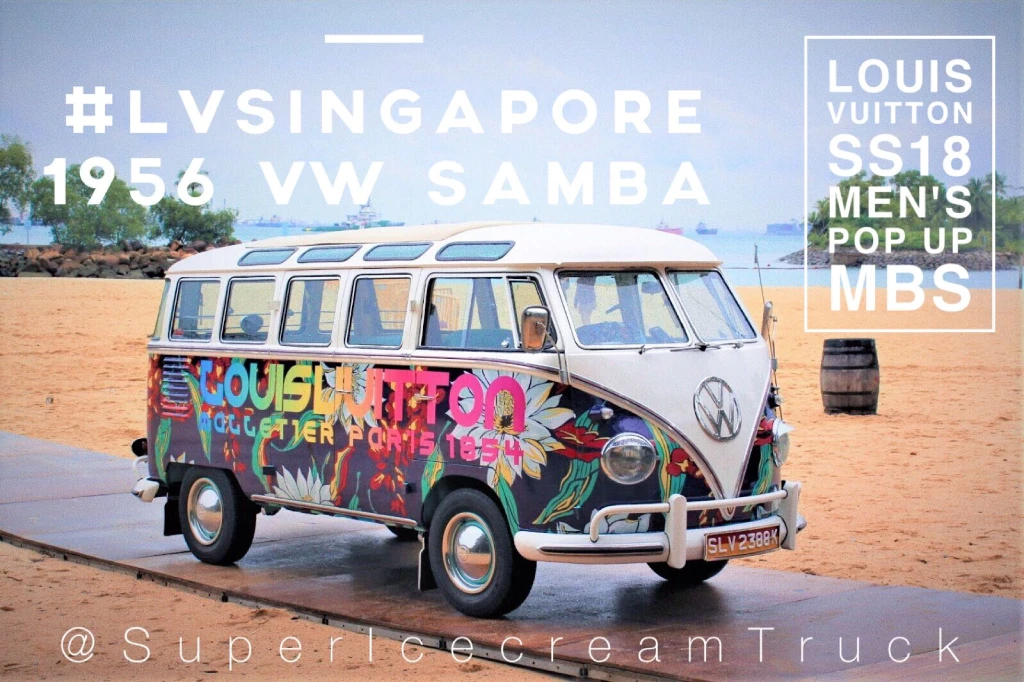
- Deluxe Microbus “Samba” — the premium model, with a full-length sunroof, multiple skylight windows, chrome trim and quality interiors, originally marketed for touring the Alps.
- Panel Van / Single & Double Cab Pickup — commercial bodies for cargo and trades.
Other nicknames you will hear include Splitty, Barndoor, Transporter, Campervan and Hippie-Van.
Why is the VW Kombi so collectible?
Scarcity, design and nostalgia. The Type 2 is long out of production, instantly recognisable, and tied to decades of cultural memory. The rarest variant, the Deluxe Samba, is especially prized — a well-restored original set a world record of around US$300,000 in January 2017, beating the price of some new supercars, for a van that cost a few thousand dollars when new.
Want to experience a restored Kombi rather than just read about it? Explore our Heritage Fleet or hire a Kombi in Singapore. Founder Tobias Peng’s restoration journey is told in the Kombi story.
Talk to us about heritage Kombis: WhatsApp wa.me/6563885337, call +65 6388 5337, or email catering@scoopysandcream.com.
Frequently Asked Questions
What is a VW Kombi Type 2?
The VW Kombi Type 2 is Volkswagen’s bus and van line, built from 1950 onward and distinct from the Type 1 Beetle. It is the rounded, two-tone “camper” or “hippie van” most people picture, produced in generations including the Splitscreen T1 and the Baywindow T2, with several body variants.
What is the difference between a T1 and a T2 Kombi?
The T1 Kombi (1950–1967) is the “Splitscreen,” with a two-piece front windscreen divided down the middle, while the T2 (1968–1979) is the “Baywindow,” with a single curved windscreen. Note that “Type 1” refers to the Beetle, whereas “T1” means the first-generation Kombi bus.
What is a VW Samba microbus?
The Samba is the Deluxe Microbus, the premium VW Type 2 variant. It featured a full-length sunroof, multiple skylight windows, chrome trim and upgraded interiors, and was originally marketed for scenic touring such as the Alps. Today the Samba is the most sought-after and valuable Kombi variant among collectors.
When did VW Kombi production end?
European VW Type 2 production wound down through the 1970s, but Brazilian production continued for decades, ending only in 2013 with a water-cooled “Last Edition.” This closed a remarkable 56-year production run, which is part of why surviving air-cooled Kombis are now so collectible worldwide.
Why is the VW Kombi so collectible?
The VW Kombi is collectible due to scarcity, iconic design and cultural nostalgia, as it is long out of production and instantly recognisable. The rarest variant, the Deluxe Samba, is especially prized; a well-restored original set a record near US$300,000 in January 2017, rivalling new supercar prices.