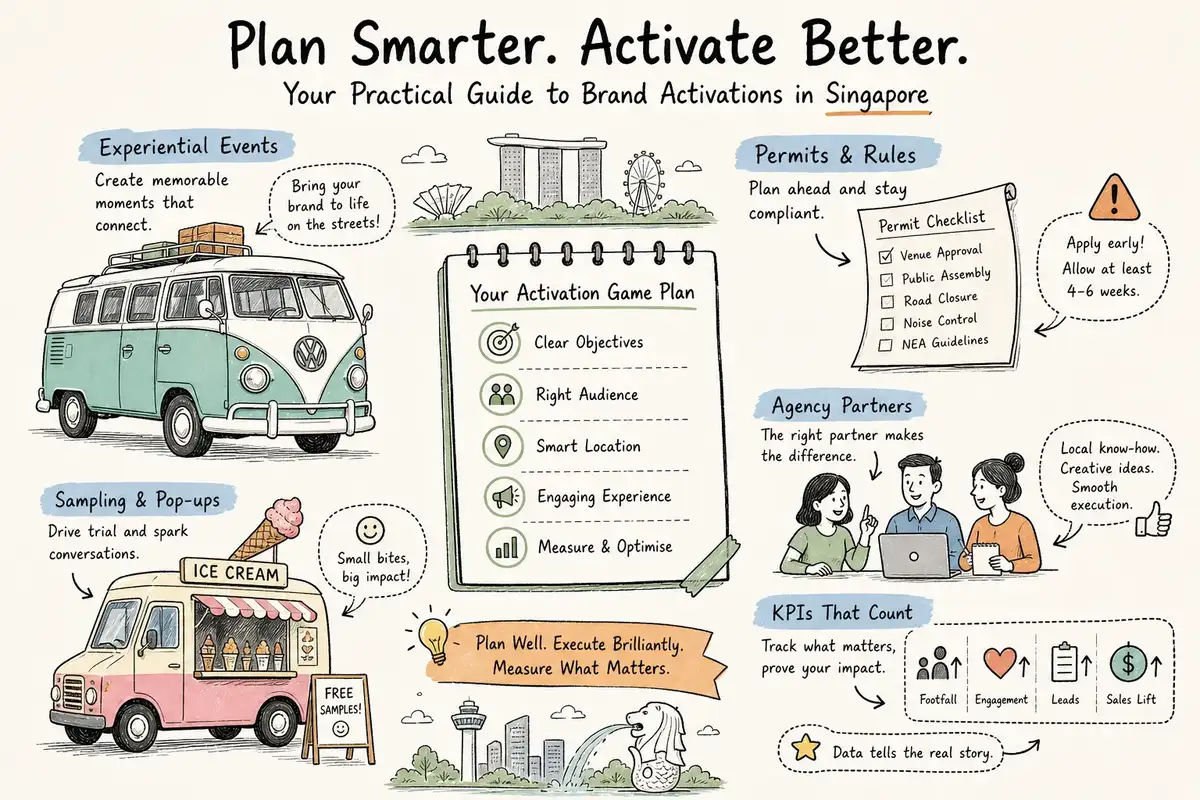
Singapore’s event calendar is relentless. On most weekends, multiple brand activations compete for attention across Orchard Road, VivoCity, and every major mall atrium in between. Many of them are invisible: a foam board banner, a folding table, two brand ambassadors in matching polos, and a QR code nobody scans. The booths blend into the mall furniture, and by the time shoppers reach the next escalator, the brand is forgotten.
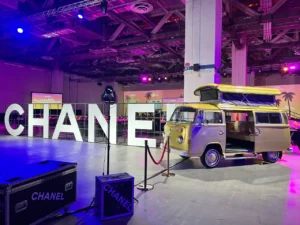
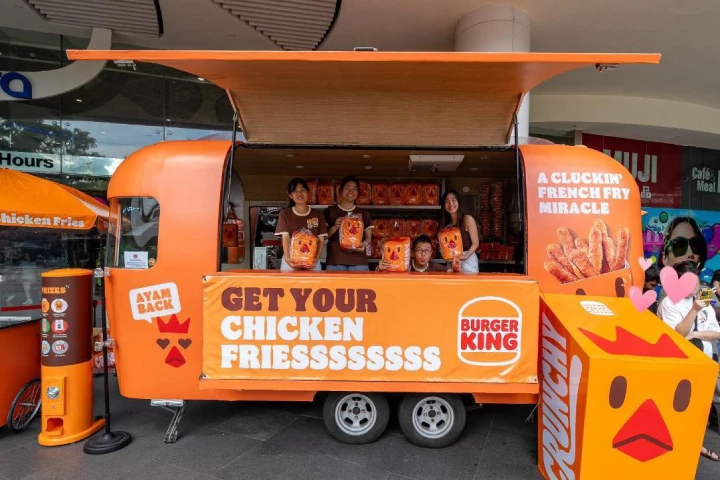
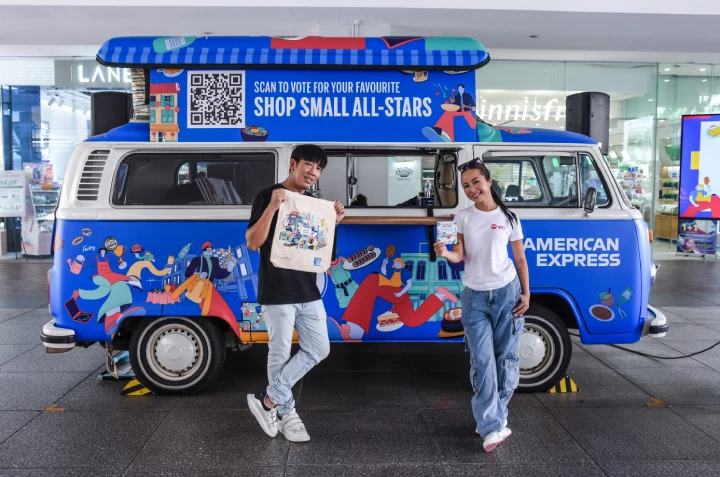
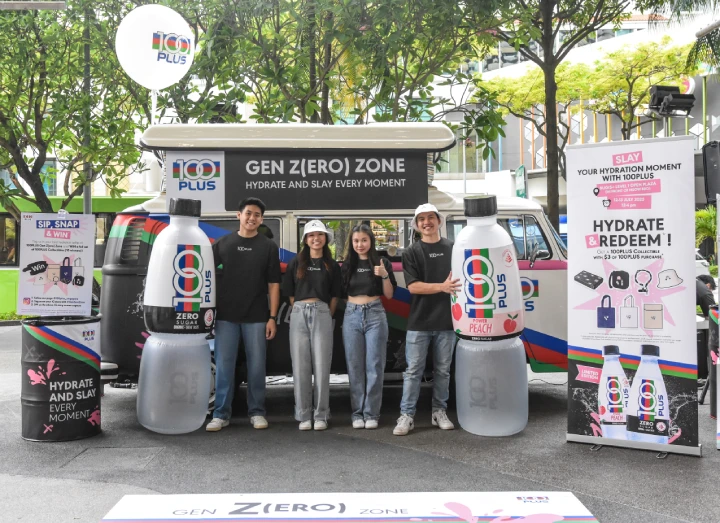
The activations that actually cut through share one quality: they give people a reason to stop. Not just a voucher or a spin-the-wheel mechanic, a genuine, sensory reason. Sensory experiences often outperform simple prize mechanics for shareability, and a well-chosen physical asset makes that case clearly. A classic Airstream trailer or a heritage Citroën H Van parked in a mall atrium can do something a pull-up banner rarely achieves: it stops foot traffic, triggers phone cameras, and creates a social moment the brand did not have to manufacture. The vehicle becomes the activation structure and the content asset simultaneously.
This guide is for marketing managers and event planners who want to run a brand activation in Singapore that actually performs. You will find the main activation formats and their honest trade-offs, realistic budget ranges by campaign type, average timelines from brief to launch, a practical agency shortlisting framework, a permit checklist, and the KPIs that tell you whether the campaign delivered.
Brand activation in Singapore: formats that get results
Not every format suits every campaign. Choosing the wrong format for your objective is one of the most common, and most expensive, mistakes brands make at the brief stage.
Mall atrium and roadshow activations
Mall atriums remain the default format for most activation campaigns in Singapore, and for good reason: guaranteed footfall, weather-proof environments, and a relatively contained permit process. Popular choices include ION Orchard for premium positioning, VivoCity for broad consumer reach, and Raffles City for a mix of both. The honest limitation is that every other brand has the same idea. A standard booth in a high-traffic mall is not automatically visible; creative execution matters more than location alone.
Outdoor experiential and festival pop-ups
Outdoor activations work better when your campaign goals centre on dwell time, lifestyle affiliation, or event co-branding. A fitness brand at a park run or a beverage label at a music festival, in each case the environmental context does part of the brand-building work. The key constraints are weather dependency and a more complex permit stack, which is covered in detail in section five below.
Mobile and vehicle-based brand activations in Singapore
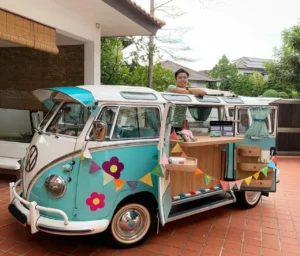
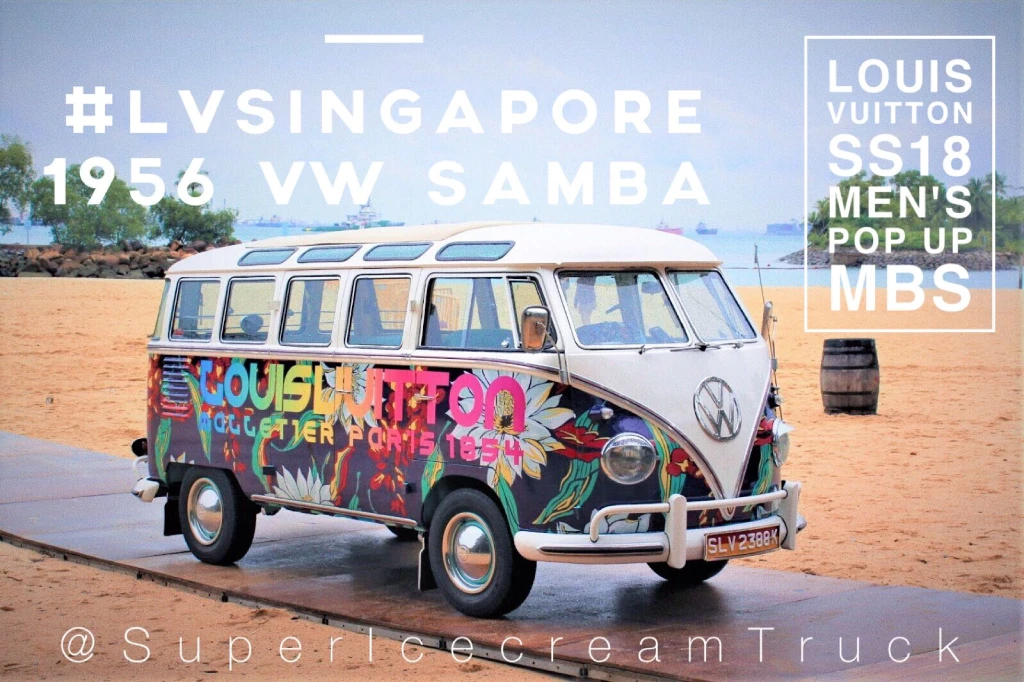
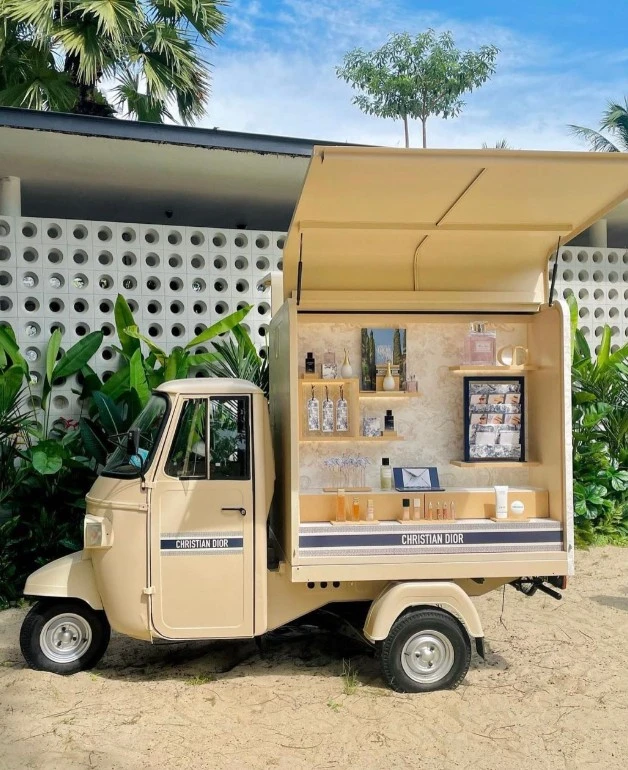
A distinctive vehicle changes the attention equation entirely. It functions as the activation structure, the photo backdrop, and the social media moment in one. This is where Super Ice Cream Truck comes in: it operates one of Singapore’s most extensive single-vendor heritage fleets, giving brands access to vehicles including a VW Samba Bus, a French Citroën H Van, an American Airstream Classic, and a Piaggio Ape, all from one operator. Brands can match vehicle aesthetic to campaign identity without building a custom structure from scratch, and without the headache of coordinating multiple sub-vendors.
Product sampling and trial campaigns
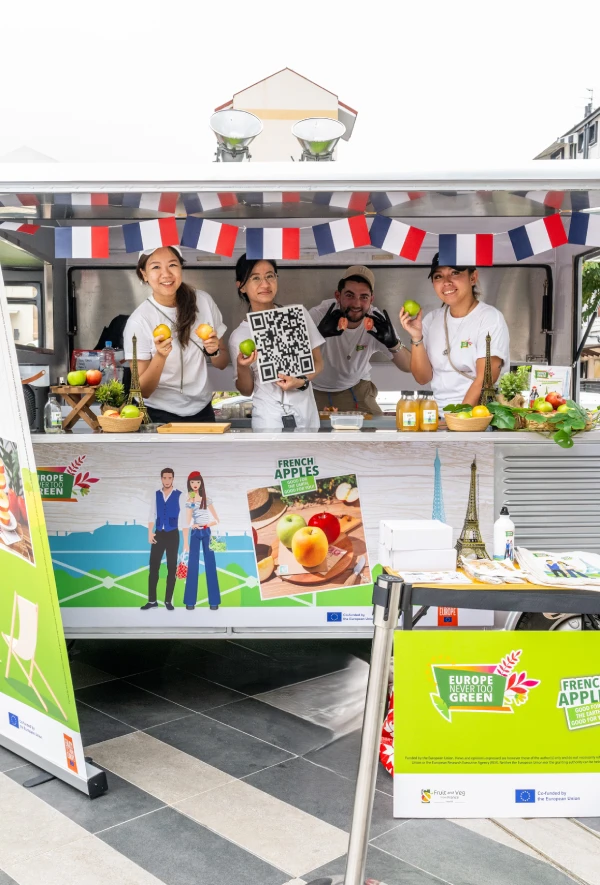
Sampling campaigns carry a higher per-contact cost compared to digital alternatives, but in-person trial remains one of the strongest conversion tools available, particularly for F&B and beauty brands. The format works best when paired with a visual hook that draws people in before the sample is offered. Research on vehicle-based formats shows they often increase dwell and shareability compared with a plain table, particularly when the vehicle aesthetic is matched to the campaign creative, making a heritage vehicle a practical choice for the sampling station.
What Singapore brand activations actually cost
Budget planning is where most campaign briefs go wrong. Marketers either underbudget and compromise on execution, or they accept agency quotes without a benchmark to evaluate them against. These figures are a planning baseline, not guarantees, but they reflect the ranges that Singapore agencies and operators work within.
Budget ranges by campaign type
- Basic weekend mall atrium pop-up: S$5,000, S$15,000
- Experiential weekend activation with some custom build: S$15,000, S$30,000
- Multi-week or elaborate custom build: S$50,000, S$150,000+
- Single-day product sampling booth: S$8,000, S$20,000
- Multi-day roadshow with trained brand ambassadors: S$30,000, S$80,000
A useful rule of thumb: single-location activations typically start at S$10,000, S$20,000, and mid-scale campaigns sit at S$50,000, S$120,000. Multi-location or immersive programmes can exceed S$150,000 once fabrication, staffing, and permit costs compound across sites.
What pushes budgets higher
Custom fabrication is the single biggest cost driver. Building a bespoke activation structure from scratch, materials, labour, logistics, and installation, can consume a disproportionate share of the budget before a single consumer interaction happens. Vehicle-based activations compress this line significantly, because the vehicle is the structure. Prime mall locations also command venue premiums that are entirely independent of your production costs, and staffing ratios for interactive or sampling activations add up faster than most briefs anticipate.
How to split your budget across line items
A practical allocation covers six categories: venue or space rental, fabrication or vehicle hire, staffing, permits, logistics, and agency fees. Agency management fees in Singapore typically run between 15% and 25% of the total campaign budget on a commission model, or as a flat project fee for smaller activations. For vehicle-based activations, the fabrication line shrinks substantially, which means more budget can go toward staffing quality and campaign duration.
Realistic timelines from brief to launch
Most brand managers underestimate how long it takes to execute a Singapore activation properly. The permit process alone catches many campaigns out, and mall atrium booking queues at prime locations fill up weeks or months ahead of key dates.
Simple, mid-scale and complex: three different timelines
A simple, single-site activation with minimal custom build is achievable in two to four weeks, but there is no slack in that schedule. A mid-sized activation with some custom production requires eight to twelve weeks as a defensible average. Complex or multi-location programmes need three to six months of runway, particularly when large-scale fabrication, multi-venue permits, or festive season booking queues are involved.
Where most campaigns lose time
The three most common bottlenecks are permit applications, venue booking queues, and fabrication lead times that agencies underquote at the brief stage. SCDF’s Temporary Change of Use Permit requires at least three working days for submission, but SFA food permits can take two to four weeks for a complete application to clear. Mall atrium slots at VivoCity, ION Orchard, and Raffles City fill up quickly, especially in the run-up to major retail periods, and booking late means accepting secondary locations or secondary dates.
The practical fix
Map backwards from your activation date, not forwards from the brief date. Lock venue and permits before finalising creative and production timelines. Vehicle-based activations offer a genuine timeline advantage here: with no custom structure to build, the fabrication bottleneck disappears, and brands can move from brief to launch in a shorter window while still delivering a visually distinctive result.
How to shortlist the right brand activation agency
The Singapore activation agency market is crowded, and the difference between a good partner and a poor one is rarely visible in a credentials deck. The framework below gives you a practical filter before you invite agencies to brief.
What to look for in a Singapore activation agency
Ask for case studies in your sector with reported results, not just photos. Agencies such as 4R Activation publish participation numbers and campaign ROI figures, prioritise partners that can show you what success looked like and how it was measured, not just what the booth looked like on setup day. Case studies with specific numbers, not stock photography, are the baseline standard.
Permit experience is non-negotiable. An agency that cannot walk you through SCDF and SFA requirements before the proposal stage will create problems later, problems that fall on you, not the agency. Measurement capability matters equally: if they cannot explain how they will track footfall, lead capture, and sales uplift before the activation launches, the post-campaign report will be a photo album, not an evaluation.
Questions to ask before signing a brief
Three questions cut through most agency presentations quickly. First: who handles permits, and what is the lead time for your specific activation type? Second: what is included in the quoted price, and what triggers variation costs? Third: how have past campaigns for comparable brands performed against their stated KPIs? Agencies that answer these questions clearly and specifically are worth pursuing. Those that deflect or hedge on specifics are flagging an execution risk worth taking seriously.
When a specialist operator beats a generalist agency
For vehicle-based mobile pop-ups, a single-vendor fleet operator eliminates the sub-vendor chain entirely. Super Ice Cream Truck offers one point of contact, one contract, and one quality standard across all vehicles, which is relevant for any brand that wants speed and consistency without paying agency markup on vehicle sourcing. For campaigns where the vehicle is the centrepiece, briefing the vehicle operator directly and building the rest of the activation around their rig is often the more efficient and cost-effective route.
Permits and logistics every marketer needs to sort upfront
Singapore’s regulatory requirements for pop-ups and roadshows are specific, and the consequences of missing a permit are significant: event shutdowns, fines, and reputational fallout with mall operators. The list below is not exhaustive for every activation type, but it covers the approvals that catch brands out most often.
Mall activations: what approvals you actually need
Written venue approval from the mall operator is the starting point. Government permits that require venue consent cannot proceed without it, so this is always the first step, not an afterthought. Beyond the permit layer, malls typically require business registration documentation, public liability insurance, an operational plan, and compliance with their own fit-out rules covering power draw, noise levels, footprint, and branding standards. Mall rules are often stricter than government requirements, and operators enforce them independently.
Public outdoor spaces: the additional permit layer
Outdoor activations trigger a broader permit stack. SCDF’s Temporary Change of Use Permit (TCOUP) is required for temporary promotional events with structures and must be submitted at least three working days before the event, with a permit fee of S$60 (verify current fees and submission requirements directly with SCDF, as these can change). Park-based activations require NParks approval, while activations on state land that is not a park may need a Temporary Occupation Licence (TOL) from the Singapore Land Authority. Temporary structures beyond a basic table setup, tents, kiosks, stages, likely require PE certification and a BCA temporary building permit, which is a cost many briefs do not account for.
Food, sampling and SFA rules
Any food sampling, preparation, or distribution triggers SFA permit requirements and food hygiene standards, regardless of whether the activity feels like a simple giveaway. SFA temporary fair permits require submission at least two weeks before the event date, with SFA’s review process taking approximately seven working days for a complete application. Food handlers must hold valid food hygiene certificates. Brief your agency to flag this at kickoff, not three days before launch.
KPIs that tell you whether the activation actually worked
Most post-activation reports look good because they are built around vanity metrics: total impressions, photos taken, and social followers gained. A sharper evaluation framework uses four KPI categories and agrees on them with the agency before the activation launches, not after.
Footfall and dwell time
Raw visitor count is measured via manual counts, entry scans, or crowd counters. Dwell time and interaction rate tell you more about quality than volume alone. Published campaign benchmarks offer a useful reference point: 4R Activation reported over 6,000 participants and one million-plus impressions for the Heineken Maltiverse Experience; Unearthed Productions reported 396 hours of dwell time and 5,600 engagements for the Lazada Festive Pop-Up on Orchard Road. These are the numbers worth targeting, not impressions on a poster.
Lead capture and conversion
Leads are measured through email sign-ups, app downloads, promo-code redemptions, consultation bookings, and CRM-tagged contacts. Agree on lead quality criteria before the activation opens: a sign-up that matches your target audience profile is worth ten that do not, and an agency that delivers volume without quality is not delivering value. Set a definition of a qualified lead in the brief, and hold the post-campaign report to it.
Social engagement and earned media
Track reach, branded hashtag use, user-generated content, and video views. Compare engagement rate to reach, not just raw numbers, since a smaller but highly engaged audience is more commercially useful than broad but passive reach.
Earned media, press pickups, organic influencer posts, shareable content, is often the highest-value output of a well-executed activation, and it is disproportionately generated by activations with a visual hook worth sharing. Vehicle-based formats consistently outperform standard booth setups on this metric, because the vehicle gives people something worth photographing before they have even interacted with the brand.
Plan well, execute with intention
Singapore’s activation landscape rewards brands that give people a genuine reason to stop, engage, and share. The brands that consistently achieve this do not stumble into it: they select the right format for their objective, plan realistic budgets, map timelines backwards from launch day, shortlist agencies with proven measurement capability, sort permits early, and agree on KPIs before the activation opens.
The other common thread among campaigns that outperform is built-in visual distinctiveness. Whether that comes from a bespoke outdoor build or from an iconic heritage vehicle, the activation needs something worth photographing. A foam board stand does not produce earned media. A vintage Airstream Classic or a Citroën H Van in a mall atrium does so consistently, and can materially reduce fabrication cost while delivering higher visual distinctiveness than a custom build at the same price point.
For your next brand activation in Singapore, whether a pop-up, product launch, or brand experience, the Super Ice Cream Truck fleet is a practical option worth exploring. With a single-operator heritage fleet spanning vehicles from a VW Samba Bus to a Piaggio Ape, the business offers one contract, one point of contact, and no multi-vendor coordination to manage. For brands that want a visually memorable Singapore brand activation without the fabrication overhead, reach out via WhatsApp to discuss your brief and get a quote.